SISIFOS
ART AS A THERAPEUTIC TOOL
SITE SPECIFIC INSTALLATION
CREATED FOR THE PUBLIC SPACE
AN INTERDISCIPLINARY RESEARCH PROJECT
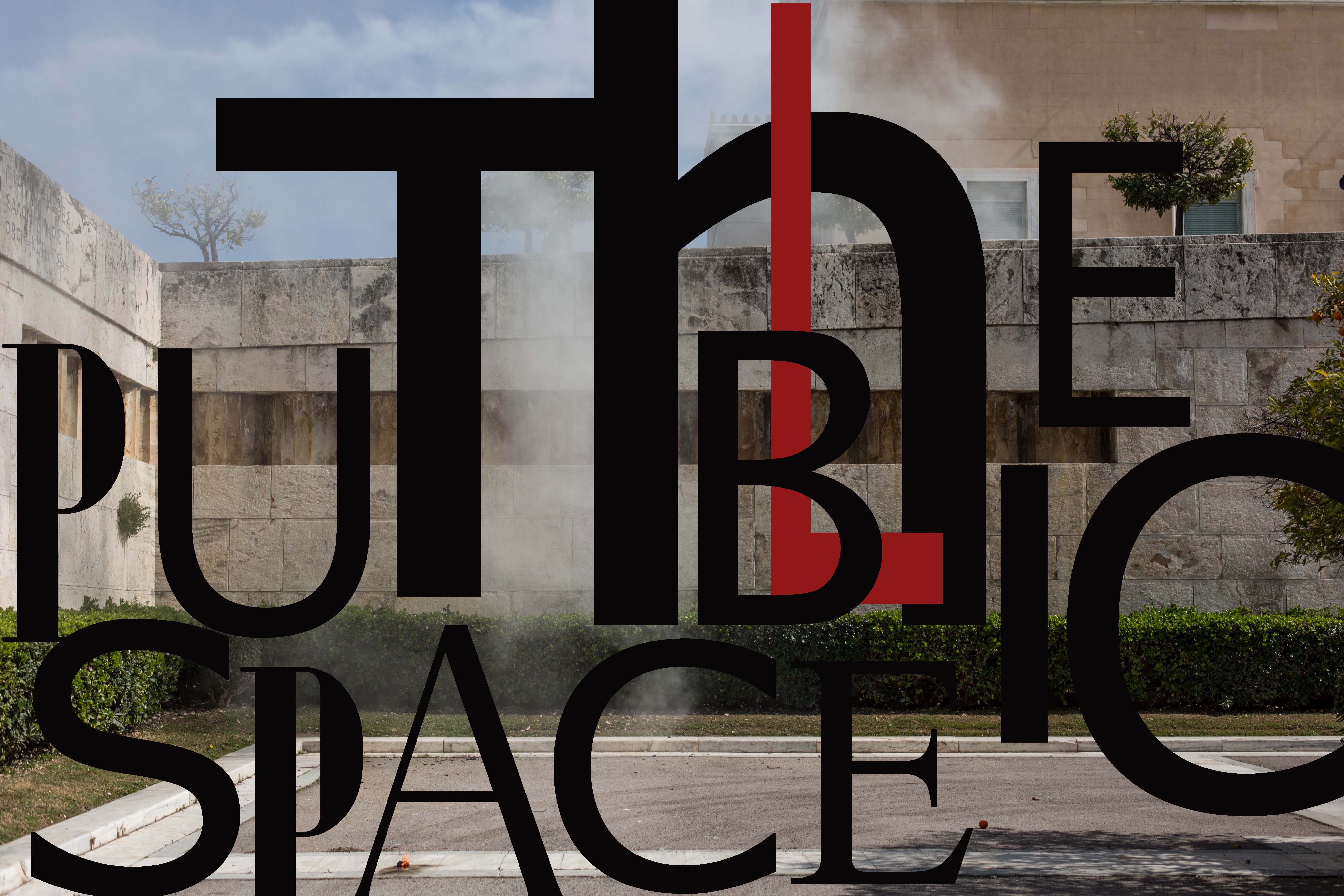
The space in which we live is neither continuous nor infinite nor homogeneous nor isotropic. But do we know exactly where it breaks, where it bends, where it dissolves and where it is reconstituted? Do you have a confused feeling that somewhere there are cracks, gaps, points of friction, or, again, a faint impression that the thing is stuck somewhere … it explodes somewhere. . . somewhere it bumps. We seldom interpret in this direction. Much more often we pass from one place to another, from one space to another, without thinking to measure, to calculate all the fractions of space. The problem is not to invent the space, let alone re-invent it […] but to interrogate it or, even more simply, to read it. Because what we call everyday life is not obvious, but opaque: a form of blindness, a way of anesthesia “..(1)
Public space is a heterotopia, in terms of creating a grid of different and realistic connections and perceptions of reality. The collective memory, the architecture, the urban planning elements but also the social space-frame and present condition create an amagalmation of different trends as to its usage, understanding and management. The relation of space-inhabitants and space-state has been a field of contemplation throughout the centuries.
Over time the concept of public, urban space has not always been of the same importance. Important social separations existed that prevented the lower social classes to experience the public space the same way or simultaneously as the upper class. Historical evidence in terms of slaveholding, archaic societies , medieval era, renaissance but also in more recent and contemporary times , lead us to thinking that in theory, everyone could and can enjoy public space. However, practically and essentially, it has never been a possession for the whole of the society. From the marketplaces of ancient cities (agoras), the public place of fermentations and discussions, we have come to the enclosed typologies of the middle ages, the need for the existence of protected space.
The uninhabitable: seas used as a dump, coastlines bristling with barbed wire, earth bare of vegetation, mass graves, piles of carcasses, boggy rivers, towns that smell bad. The uninhabitable: the architecture of contempt or display, the vainglorious mediocrity of tower blocks, thousands of rabbit hutches piled one above the other, the cutprice ostentation of company headquarters. The uninhabitable: the skimped, the air less the small the mean the shrunken, the very precisely calculated’. The uninhabitable: the confined, the out-of-bounds, the encaged, the bolted, walls jagged with broken glass, judas windows, reinforced doors.
Renaissance has set new data since enclosed spaces turned into open spaces in absolute geometry and harmony. Public space is now set at the center of public life and has been studied as a field of formation of ideal theoretical models based on sophisticated and seemingly beautiful decorative expectations and references. In a sense, public space has been “directed” and staged in a way so that the sense of “beauty” is a result of rational rules of perspective which was the greatest mathematical and aesthetical breakthrough of renaissance.
However, the decisive victory of the city over the countryside came a few centuries later.
For Marx, one of the greatest revolutionary merits of the bourgeoisie was the fact that it “subjected the country to the city,” whose “very air is liberating.” But if the history of the city is a history of freedom, it is also a history of tyranny-a 93 history of state administrations controlling not only the countryside but the cities themselves. The city has been the historical battleground of the struggle for freedom, but it has yet to host its victory. The city is the focal point of history because it embodies both a concentration of social power, which is what makes historical enterprises possible, and a consciousness of the past. The current destruction of the city is thus merely one more reflection of humanity’s failure, thus far, to subordinate the economy to historical consciousness; of society’s failure to unify itself by reappropriating the powers that have been alienated from it.(2).
Decades after World War II changes in society and art are occurring rapidly. The need is presented for the works not only to be exhibited publicly but also to be created publicly interfering in a specific place (site specificity). The art work is not only included in the space , it also interferes and attempts to improve it with its presence and furthermore to remedy the relationship and the communication with the social web.
Public visibility of the art work creates an inevitable social interaction. Art requests of the “city” to meet each other and society asks art to appear , acknowledging that the aesthetic fact is necessary to “go around” publicly , even when people prefer or are forced to inhabit in their privacy. The natural presence of the art work in public space, or, in a way, in whichever space “outside” the domestic, constitutes a channel first of all of dialogue and activation of consciousness. The sense of term Public Art includes sculpture , performance, activism, interference in space and a wide spectrum of artistic practices which are difficult to categorize , although they do share a common characteristic, beyond themselves as artistic facts, their existence in the Public Sphere, but also their existence for it. Art is not Public because it’s happening in Public Space, but because it contributes to the activation or construction of Public Sphere. The construction of public sphere has a different meaning than the interference in Public Space. Interference is considered to be an act of design or placement of an object in Public Space, while the construction of public sphere requires the installment of communication devices that create conditions for public conversation or action. Public Art , in that sense, creates frames that form political identities. Public sphere that is established by Public Art , is the political Public Sphere (3). Public Sphere is discussed and emerges in different and hybrid spaces , multiple uses, diverse urban structure ,historical architecture and geographic quality where different functions, desires and programs collide.
Public art often promises a commitment not only to democracy as a form of governance but also as a general spirit of equality (4).Public space (5) is a space upon to which the meaning of democracy falls. It is a democratic idea which encapsulates the senses of equality , equity and common ownership and its quality reflects also the quality of democracy. Therefore it is noticed that the second common factor of art and public space, apart from man, is the value of democracy.
The requirement for the exhibit is not only its artistic adequacy, but also its bidirectional communication with its daily audience, passers-by, wanderers, citizens and visitors. It aims at improving perception, sensitivity, as well as spiritual health through art. The promotion of values such as humanism, solidarity, respect in society in terms of common problems. The cultivation of the connection of art and population, regardless any social, educational or other division. The promotion of diversity, the cultivation of social consciousness and the reinforcement of social cohesion far from stereotypes of economical crisis, health or political crisis. Redefinition in terms of free public social spaces and the rehabilitation of social welfare. Social welfare can be defined as mental and physical health, social and economic growth, but also participation in politics without any social or economical exclusions. The role that art plays in this specific part, is involved indirectly , as it empowers the relations within a community and creates the sense of “belonging” in parts of the population. It is flow, communication, a junction of places. Interference is identified not only with the physical characteristics of a place but also with the totality of procedures, institutions, and flow of information that correlate economic, social and political data. It is about having an excuse for the passer-by to start again to observe, to see, to live and feel their daily routine in a different way.
Communication activities (6) are a form of political action in the Public Sphere. In contrast with the strategic or instrumental action, it launches from the idea of a subject’s stable identity, that with logical conversation (alone) is able to set aside any social differences, personal ambitions, , and create prerequisites of collective identification. The Public Sphere is identified with the “transition to the Public” or with “doing something Publicly” , which fills certain points and positions with Public Life. Therefore it may occur in private, commercial even in moveable spaces.
“The leadership of the political and economic subsystems and the supremacy of the ‘intermediaries’ of power and money over the channels of mass communication threaten to erode the cultural in general and the communication reproduction of modern societies in particular. This corrosive phenomenon is recorded as “colonization of the world of lived communication”. (7). The biota is the “horizon” of communication, the “cultural repository of knowledge”, where knowledge refers to the context of unresolved beliefs, worldviews, traditions, etc., on which the communication interaction is based and within which it is possible to justify the risk of generalized disagreement and restructuring ‘(8).
In transient and fragmentary public spheres, which are activated by the existence of artistic visual environments in publicly visible spaces, practices emerge that interfere more with the ways than the places of conversation. “Public Art establishes an interactive framework. It is connected both with the aesthetics of communication and with moral and philosophical issues of the identity of the Other “(8).
In a time when fast rhythms ,irrational use of technology and isolation daily degrade urban public space, the art work as an exhibit within the urban web, is an occasion to create a visual experience – experiential relationship with the audience by promoting the thought process and decision making in terms with the collective or individual problem.
Forms or spaces are not of concern here ,but the fluctuations of experience and knowledge around networks, flows, that allow or interrupt access, strengthen or cloud the presence of spectators or acting individuals.(3)
Art does not become political due to messages and feelings which transmits about social and political issues, nor due to the way it represents social structures, conflicts or identities. It is Political due to the distance it takes in relation to these functions and since its own practices create forms of visibility and presentation that reshape the way in which practices, ways of existing and ways of awareness and conversing are intertwined in a mutual sense. Art can be defined as Political in the sense that it exists in the space where social conditions are attempting to interrupt the existence of public sphere. This interference and the inevitable conflict the aesthetic activity offers could potential self-identify as political. The reformation of relationships between space and time, subject and object, common and individual, as well as disagreements, form the enhancement of identity, of knowledge and social determination for every place and the people that “cohabit” it.
[Dialogue is the opposite of spectacle] (2)
Translated by Eleni Moraiti
(1) Georges Perec / Espèces d’espaces.
(2) Guy Debord / La societe du spectacle
(3) Massey / 2005
(4) Rosalyn Deutsche/ Art and Public Space: Questions of Democracy. 1992.
(5) Claude Lefort/ Democracy and Political Theory. 1988.
(6) Habermas [1989(1962)]
(7) Habermas, J.(1989) The Structural Transformation of the Public Sphere: An Inquiry into a Category of Bourgeois Society.
(8)Habermas 1981/1986.
(9) P. Kouros/ 2008.
 Sisifos