SISIFOS
ART AS A THERAPEUTIC TOOL
SITE SPECIFIC INSTALLATION
CREATED FOR THE PUBLIC SPACE
AN INTERDISCIPLINARY RESEARCH PROJECT
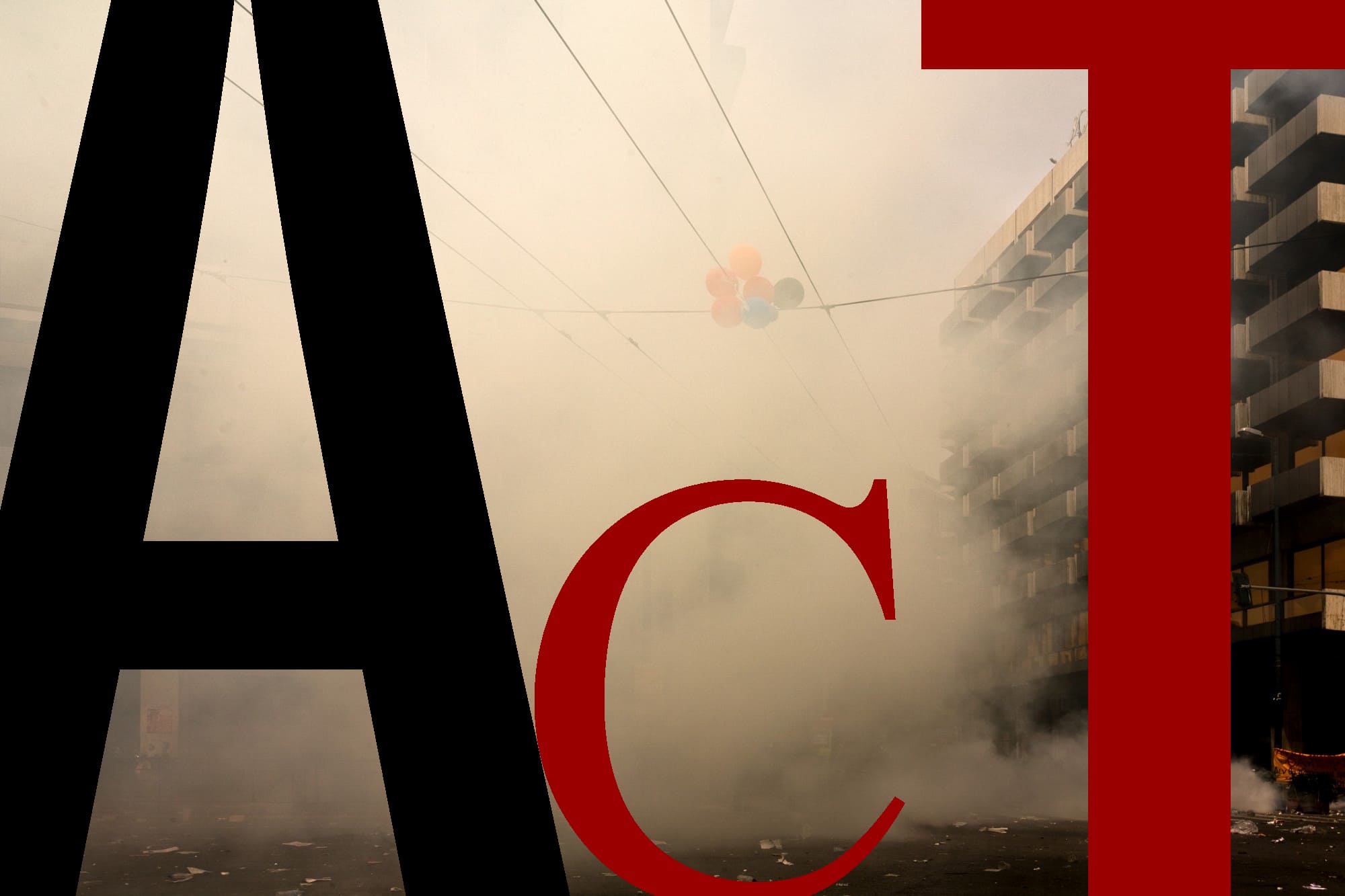
[ ACTION SISIFOS / 36 AESCHYLU STR. SITE ]
Sisifos attempts to create a relationship between observation and consciousness in regards to the senses of trauma, ailment and cure as much as to the stance of artistic procedure and action in the specific time – historical frame.
The enforcement of a specific way of life and the adjustment of the living conditions that was created by the health crisis due to the covid-19 pandemic brings to the field of research the sense of visibility and viability in terms of the way ideas can exist and develop but also the way these can find their way to the social web. The art work does not exist if it is not exhibited. Despite the different opinions in regards to alternative ways of exhibition, SISIFOS acquires physical presence at two central geographical places in the center of Athens. The first one – a building complex at 36 Aeschylu st – is the space that hosts part of the thematic. It is ahead timewise and is of introductory character to the whole body of work. The second one – Stoa Anatoli – is prepared simultaneously , will be completed at a later time and creates a visible continuity and completion of the visual physical totality structured at both physical spaces.
These works use primary photographic records redefining the relation of scale, color and stylistic quality in the natural spaces they are positioned thus creating a new visual composition-work. The content of photographic images is redefined due to its new form and structure in the sense that is presented but also due to its organic composition in the space that this is set. Photographic object-place and visual interference form a new uniform work.
The building complex at 36 Aeschylu st is a place unexpectedly hidden and surprisingly quiet and silent. A geographic spot very close to a busy, loud square. Most of the building’s apartments are now used as storage. The few people that reside there keep to themselves. The relationship of space with the social web that surrounds 36 Aeschylus st is virtually non-existent. It is certain that the relation of space – place – society has underwent changes.
The architectural structure of space welcomes you by leading you to a semi-outdoor space. The optic is frontal. The ultimate architectural rhythm – architectural form creates a repeated pattern of succession of wide shut windows, rolled metal grids pulled down and masonry. The components of space – windows, doors etc. have a stylistic homogeneity regarding structure and form creating a well designed canvas. Being in that space you hear nothing. It is as if a part of human physiology – the ability to hear – is not present.
This space was selected and defined as gallery for the specific project due to its forementioned quality and morphological characteristics in full counterpoint and breach with the Stoa Anatoli – the second venue of action, despite their close geographical proximity.
At the frontal and only visible side a large scale print of photographic work was installed. The primary photographic documentation was created on September 2020.
The intention of the audiences’ experience is defined by scale, color, stylistic quality and interference to the image – record itself.
In the building complex at Aeschylu st a single photograph has been used , having as reference a minimalistic perception of sculpture that has severed relations with the decorative tradition. The expressive sculptural means are there but are almost “invisible”. The lighting condition is daylight and symbolic hints of light during evening hours.
The theme of the image – Lesvos – acquires a re-marking not only to its geographical designation but also to its thematic in the sense of the incident. It doesn’t really matter where the image – historical document was shot. What matters is its timelessness and semiotics. According to Aristotle “the purpose of art is not to represent the external appearance of things but rather their internal significance”.
Smiling young children, wet and half naked after swimming in the sea. The temperature is approximately 40o Celsius. The camp at Moria has been completely burnt down. People having walked many kilometers with their belongings in hand have stopped to this particular beach. On one edge a young boy with his head down. Almost helpless and silent. In front of an abandoned building. The building of this picture could be the ground floor of the space. From the black door of the image may appear soon another child. The ground floor is connected also with the second floor of an adjacent building activating the optics upwards. “The eternal return of an ever-frightening present seems to be the victory of a horrible phantasmagoria”*
The concept of the illusion of the existent and the non-existent in terms of the material existence of things . The relationship of sizes and the visual activation of the total as a unity. A large scale work designed for the place that is installed in. The intention of a calling in a space that is perforated and visible to the fullest extent. Visibility is feasible not only to the visitors of the exhibition but also to the passers-by.
The decades that followed World War II changes in art are happening quickly. A need is presented for the art works not only to be exhibited publicly but also to be created publicly by interfering in a specific place (site specificity). The art work is not only included in the site, it also interferes and attempts to improve it with its presence. At the same time it attempts to communicate with the social web by improving their severed relationship.
* Walter Benjamin/ Paris, Capital of the Nineteenth Century
[ Point 2. Stoa Anatolis, 10-12 Aristides st. ]
[ 22/02/2022 – 22/03/2022 ] extended till 02/04/2022
Sisifos after the introducing presence at Aeschylus building complex developed the dramaturgy and stylist part, in the main spot of the act, as it was designed to be. The idea developed and organized in both, theoretical and the visual part, based on Stoa Anatolis on 10 – 12 Aristides Street.
Stoa Anatolis constituted and hosted the main core of the physical presence of act. The architectural complexity of the structure of the space, the multilevel morphologically character, and the social identity were the key elements of the research process, the design of the total artistic ensemble and the individual visual art compositions – installations, where all together combine the single vertebrate narrative in the specific space.
Stoa has two entries, leading you to a patio. The one entry gives you access in the basement where mainly printing houses and warehouses dominate or private places of unknown use. Multiple stores and showcases or glazed small rooms are on the ground floor. Some active and useful, other under change of use and other work partly some hours of the day or some days of the week. The places communicate each other with a paradoxical relationship and visibility. From the basement to the terrace the floors are connected with open vision staircase. From the ground floor there is also access to the 8 floors of the Stoa building complex from elevator and from stairway. The visibility from spot to spot of the space varies as well as from floor to floor. Oval hollow form of the atrium, the ability of sky viewing, the natural light, and the multiple spatial levels were the main elements for the selection of the specific Stoa for the project.
The exterior of the building does not reveal any information about the interior multifaceted, unexpected architectural edifice. The inner microcosm seems like a hive. With many individual elements, time signs, aesthetic innovations, personal aesthetic identity different in each point. It is basically a commercial Stoa. With employees, visitors, customers and passengers. Mobility is not the same throughout the day. The uses of active spaces vary creating an alloy from multiple aesthetics, sounds and conditions of daily operation. The residents and the daily mobility, constantly recompose the space, therefore the art work itself. They are the ones who are ‘roommates’ on it. Their actions, their habits, their anthropocentric imprints and the traces of life, redefine the artistic composition constantly in different way and components all day long and in all time duration of physical presence of art exhibition in this place.
The visual art installations attempted to include these ‘’actions’’ of local society as part of the overall composition. The sound of printing houses, the smells of colors, the windows and showcases closed with butcher paper, were used as a canvas in which the artistic compositions are enclosed. The exhibition was accessible on during hours of high work mobility where spectators and employees circulated in the same spaces, but also during hours of absolute emptiness with closed shops, and empty from people spaces.
The art works had a symbolic note of artificial lighting in the evening and natural light depending on the area point and time of day or weather conditions. The time and the day determined the type, and the qualitative characteristics of the experience. The sound design created for the needs of the artistic project, was heard in all areas of the Stoa, utilizing the natural speaker created by the architectural structure of the space and coexisted with the roar of the city and machinery at rush hour. When the area was empty of city sound, it was the only dominant sound.
14 spots on Stoa were activated in a visual way, creating a large-scale installation that connects the whole building and redefines the relationship between the visible and the invisible, the relationship of the limits, of the beginning, of the end or any way of route. These points followed one another without distinct borders. The order was defined, but the overall view – was the personal walking route of the attendee in the Stoa. The routes one could travel were multiple, as was the way the art works were possible viewed. The art works defined a dimension that was their physical existence, the real matter of their defined dimensions. Their existence in specific “places” – points – and in specific ways turned this dimension into a variables ones, in the sense of redefining the space, where a new part is inserted, it creates a new “whole”, that is, a new universe. The dimensions are now fluid, without a defined limit and concern the frame of view of each human subject, in the specific case of each attending visitor – spectator in the exhibition. They utilize the concept of the unexpected, of personal feeling and experience, and of the dynamics that develop between the exhibit and the viewer using the concept of the “big picture”.
As far as thematic part SISIFOS was designed and implemented based on key existential and philosophical questions, which arising from human psyche, philosophical pursuits regarding on evolution and absurd, the socio-political condition, the specificity and temporality.
Based on the above, an aesthetic reading was created, and a flow of visual stimuli all over the Stoa, characterized by dense spots which are followed by less dense ones, or silent from information areas.
The dramatic narrative was followed by a “circular” connected relationship where each point concerns a subject, consisting of a photographic image or multiple ones, in direct relation to the next or the previous ones. The points had two main basics viewing optics. The obvious and the unpredictable which was usually revealed after [x] time of staying and wandering of the spectator in the space.
The points were not numbered, there was no map, and no route guidance. The time of stay and observation of the spectator in the area was a basic part of the total or partly decoding, of visual and hearing stimuli, although of total synthesis and was crucial to recruitment of experience.
The whole synthesis of artistics installations uses photography and visual arts in the sense of free open form and composition. Use experimental ways and techniques in terms of implementation, and the utility of materials create a single one unique large scale art work where, photographic material and art installation-action has no distinct limits.
The main means of expression used for the implementation of art works was primary photographic documents, created for the specific project and archival also primary material of previous years, which were the occasion and the beginning of the idea for this project.
The selected photographic images, created a single narrative, an allegorical story of the real modern world. Historical photographic evidence gives the social, political and anthropological stigma of today, free from representation patterns chronological and aesthetic compromises.
The relationship of people, the relationship with the natural environment, the fear, the courage, and the joy appears in these images. These meanings acquire universal and timeless identity which in relation to the space that surrounds them, create new connections and coherences. They try to answer questions and raise the concept of the connection between historical reality, emotion and logic. The synthesis of images – long scale installation, and the way of its existence on natural canvas of Stoa was main part of research as far as the utility of expressive ways.
The artistic installation attempted to follow the organic architectural form of the building complex, without additional additions to masonry, or any other intervention, intervening radically in the already existing architectural landscape or structural form of the space. Followed the scale, the chromatic and tonic patterns of the natural spot and connected to them in a unifying and gentle way. The morphological ups and downs of whole installation has to do mostly with scale, partly or full visibility depends on specific spot, although the thematic frame of each image.
The esoteric rhythm of wholeness originate from action art techniques in the while the art works were established in the every specific place were designed to be- site specific installation. The optical illusions created on purpose, dissolve and reconstruct the functions of images the scale and semiology. They do not belong definitively neither here nor there. Belong to an ensemble which shrinks and expands without following a prescribed manner.
 Sisifos